Creating a scalable ecosystem for Marshall
Iconic Legacy. Modern Ecosystem.
Connecting brand vision, daily ecom production, and global market rollouts under one visual system.
PRIMARY ROLE
Lead Graphic Designer
Visual Designer
FOCUS AREAS
Digital Systems Architect
Cross-Department Alignment
UX Design
UI Design
PLATFORM & METHODS
Figma set-up
Co-creation workflow
Design Systems
monday.com integration
Localization
KEY IMPACT
Handle daily e-commerce design and building a unified system across E-com, CRM, and Social, enabling fast global rollouts across Americas, APAC, and EMEA with 1:1 visual accuracy.
Bridging the gap between brand and e-commerce
The brand team brought me in to help bridge the gap between brand, marketing, and e-commerce. While Marshall had an iconic logo and world-class lifestyle photography, our underlying digital workflows were long overdue for modernization.
Departments worked in silos, and cross-team alignment was missing. While executing daily e-commerce visual assets, I stepped up to build a structured workflow, which naturally evolved into a complete design system and unified digital ecosystem.

The Challenge: Growing pains and siloed teams
Rapid digital growth created daily operational friction across teams. Work was created in silos across web, CRM, and social. Common visual elements were repeatedly designed from scratch, and too much technical knowledge lived as tribal knowledge inside individual heads.
As Marshall expanded globally across the Americas, APAC, and EMEA, adapting digital assets for local markets became a major bottleneck. The brand needed to scale production, keep visual quality high, and streamline handoffs to our external developers.


Building the Foundation
Steady as a three legged stool
001 Brand Foundation
Core visual tokens covering colors, typography, logos, and base assets. Shared with extended teams, app developers, and external partners for global consistency.
002 Website guidelines
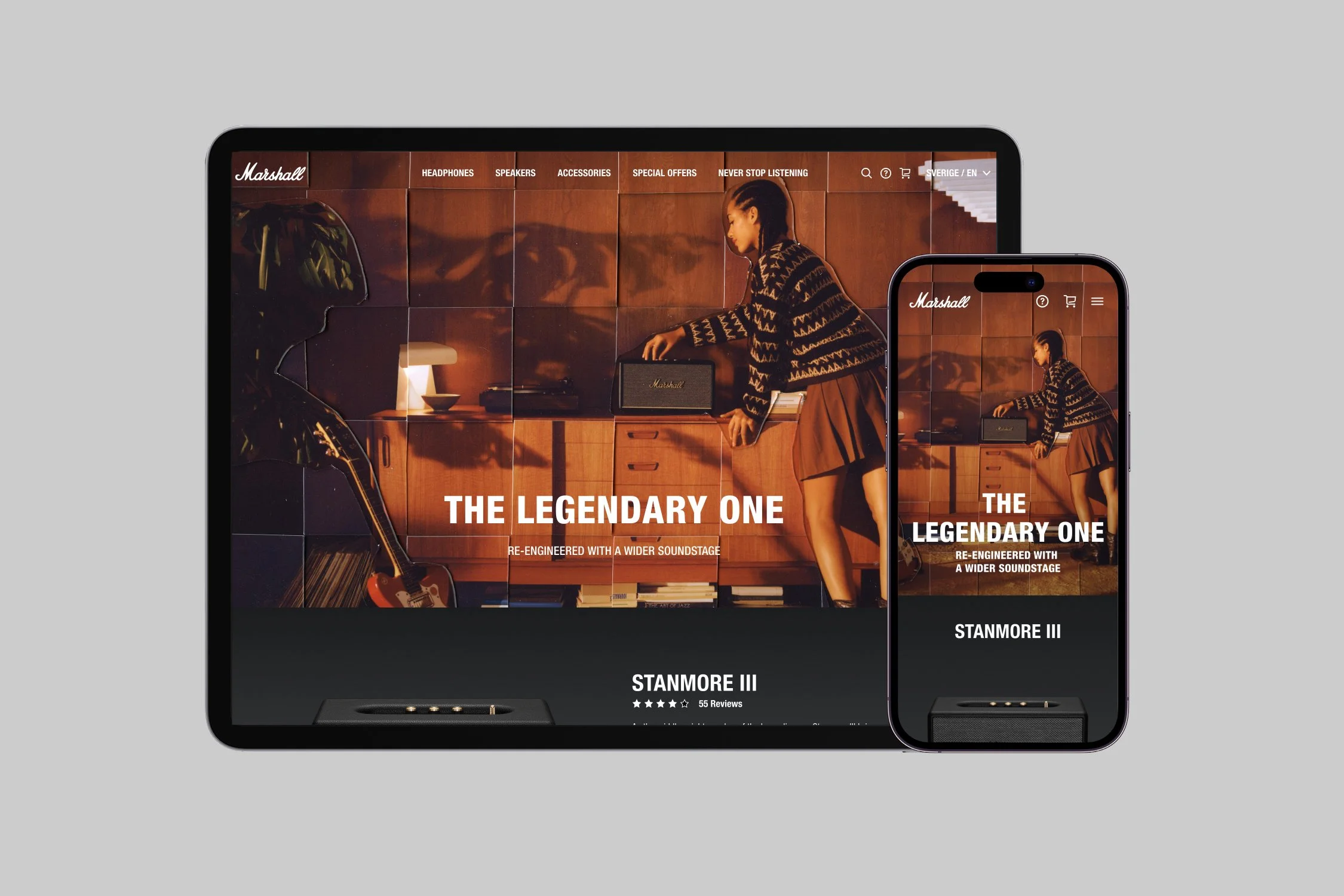
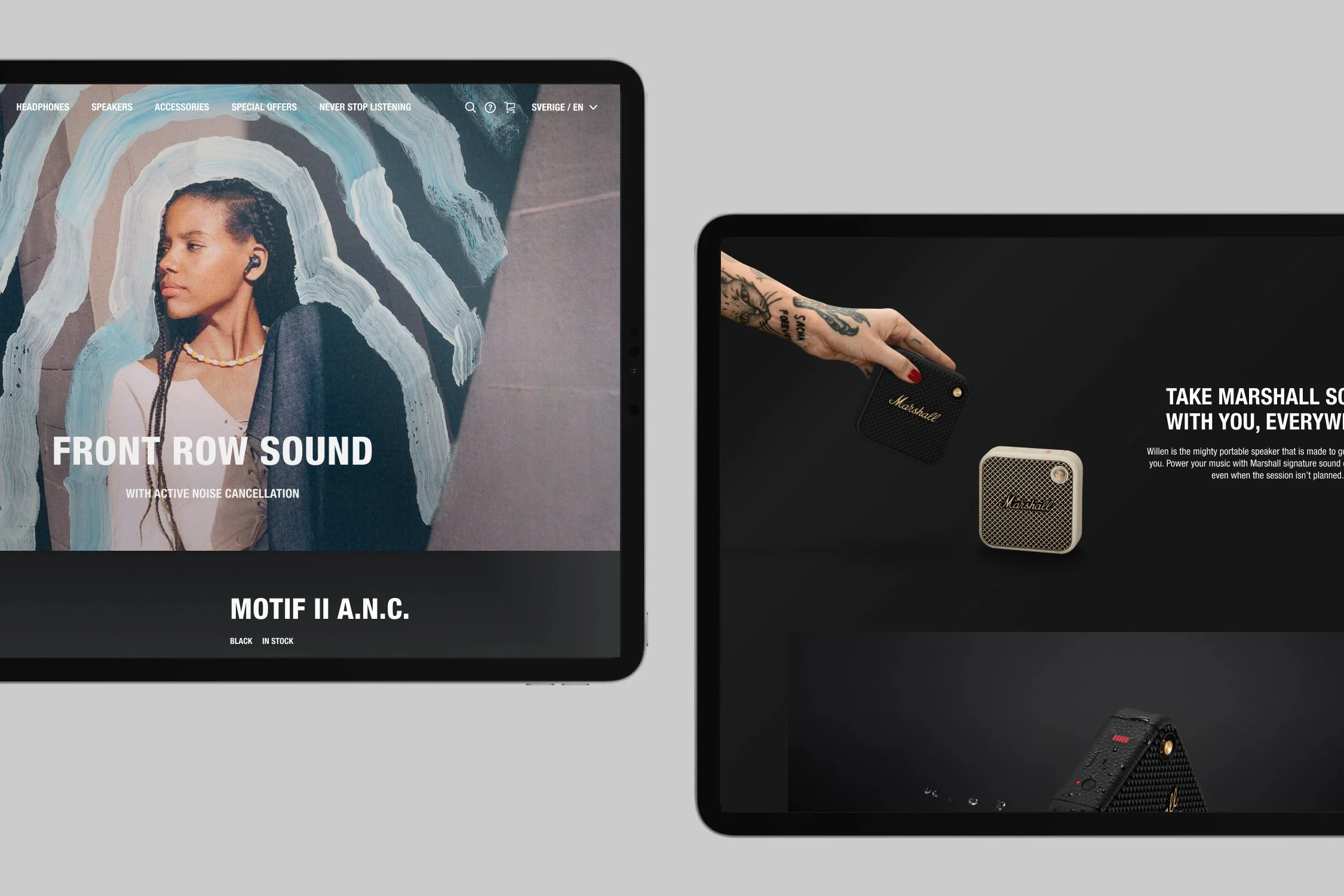
Dedicated design patterns as components for the web store with exact type scales, image proportions, hero structures, and ux patterns. This ensured our Figma mockups matched live code 1:1, making syncs with developers fast and predictable, while setting up a future sync with Storybook on their side.
003 CRM System
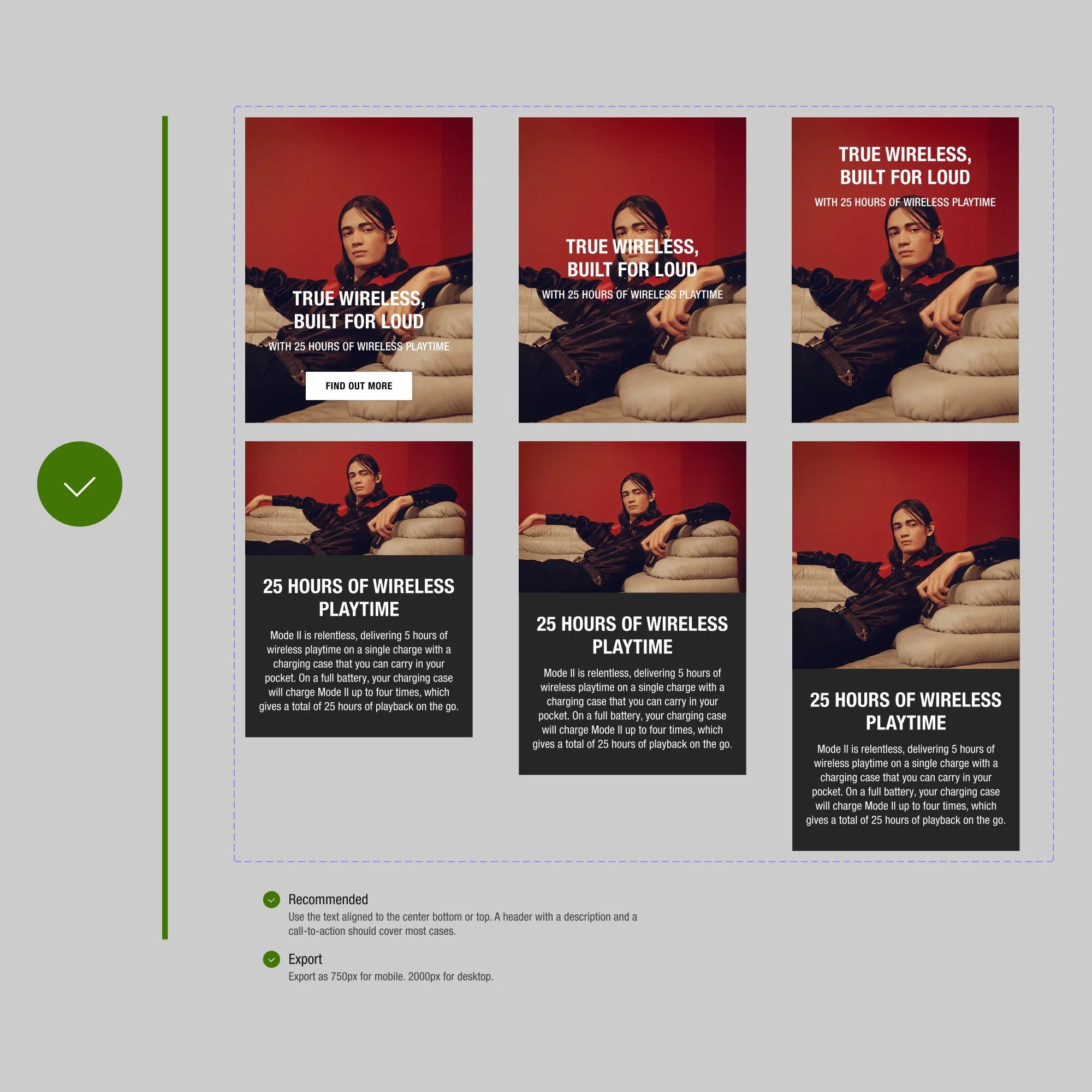
Standardized templates and modular components specifically for email marketing, newsletters, and automated user journeys.
Sprinkles on top
I also updated our components to meet WCAG AA compliance, keeping our design fully aligned with legal accessibility standards in Europe and the US.
Execution and Global Scale
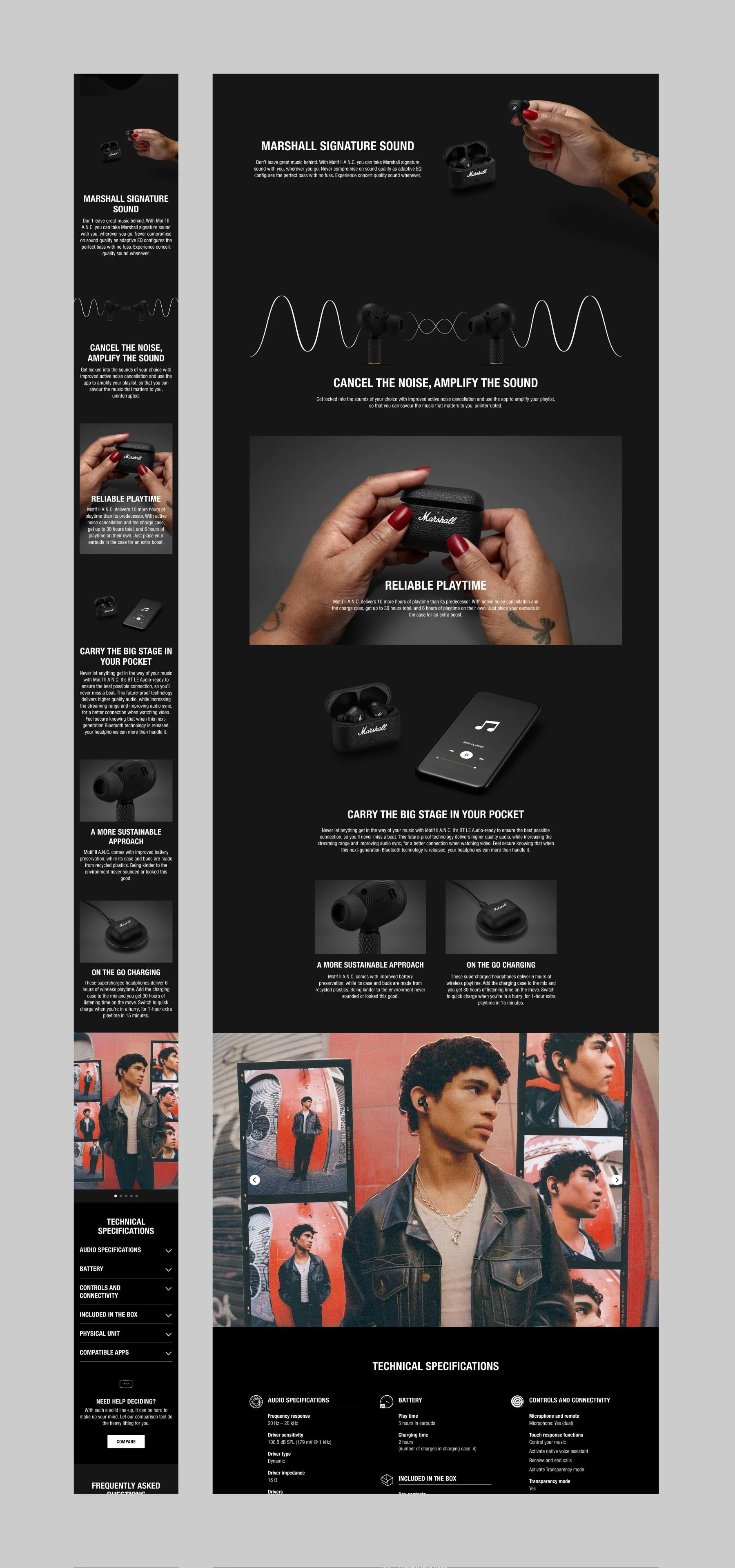
Once anchored, the design system became the everyday toolkit for our internal creative team and external agencies. Instead of starting from scratch, we used reusable design patterns, built in direct alignment with how our developers coded components, to assemble new product launches, seasonal pushes, and commercial updates.
For our global expansion across Americas, APAC, and EMEA, I built flexible components that let regional teams localize copy and campaign assets seamlessly without breaking global brand rules.
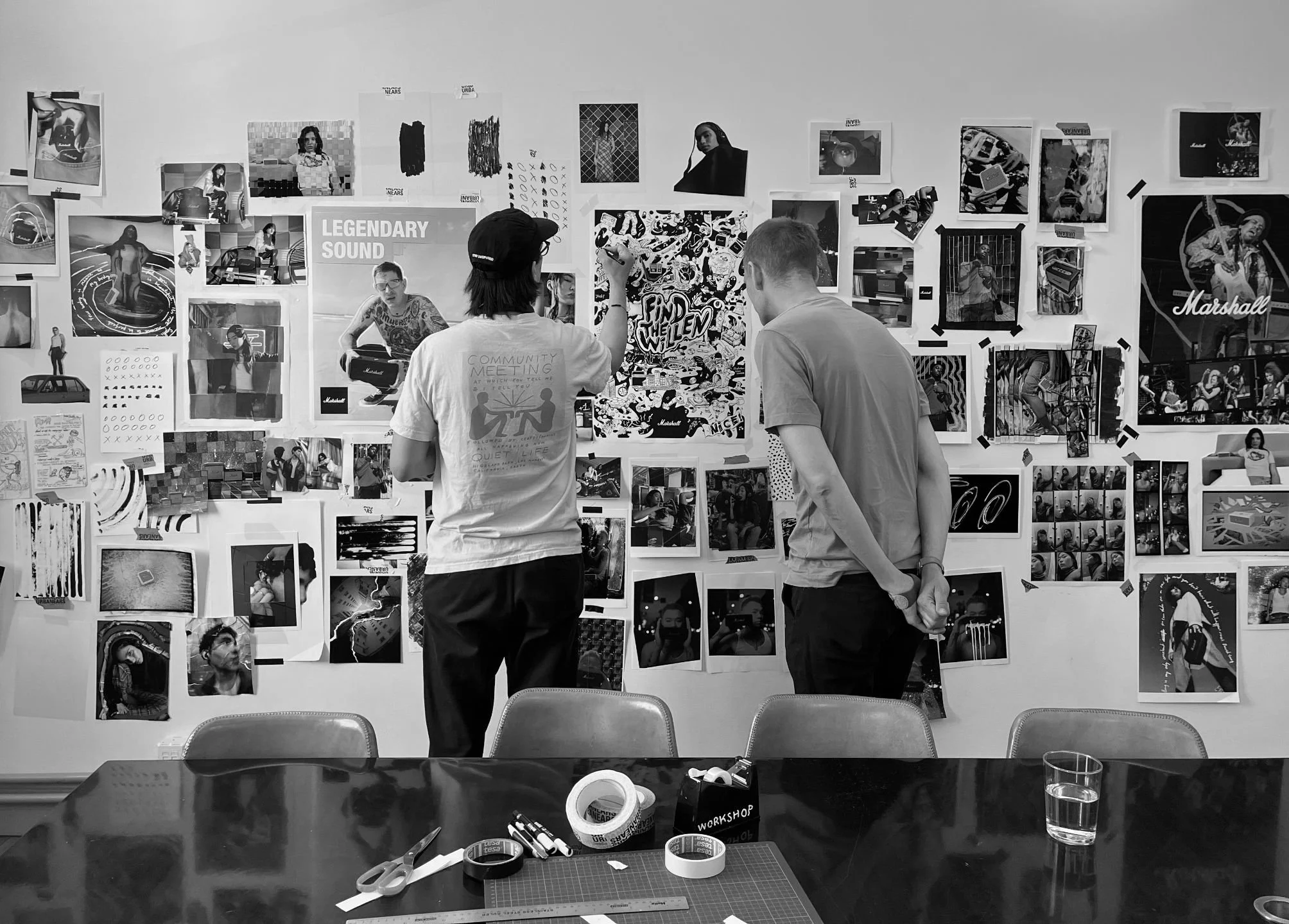
Collaboration with external partners became much smoother. Having shared component specs in Figma gave us a common language to discuss technical details, run QA, and resolve edge cases before code reached production.
Bridging teams and establishing accountability
Because ownership between Brand, Marketing, and E-commerce was historically blurred, I used the design system as a practical bridge.
I took charge of onboarding internal teams and external partners on how to use the setup. By documenting design decisions and defining component ownership, we eliminated daily friction and unnecessary alignment meetings.
To keep production moving smoothly, I integrated our Figma workspace directly with our project management tool Monday.com. This gave Brand, Marketing, and E-commerce a shared environment to track status, review visual assets, and manage deliverables together in real time.
Results and real Impact
Turning noise into harmony at scale
Fast and predictable rollouts
Built seasonal campaigns and landing pages much faster using pre-built design patterns, ensuring live site builds matched our visual intent 1:1.
Streamlined handoffs
Clear Figma specs and tokens minimized guesswork and visual bugs, replacing endless back-and-forth comments with actionable feedback in Figma and monday.com.
WCAG AA compliance
Met international accessibility standards across core ecom journeys without compromising the brand's visual edge.
Unified expression
Maintained visual consistency across e-commerce, CRM, and digital channels in the Americas, APAC, and EMEA regions. Making Marshall look and feel the same everywhere.
Smooth onboarding
Reduced onboarding time for new designers, freelancers, and external agency partners by giving them clear, documented guidelines from day one.
A major benefit of building a design system is documenting our design decisions. Once a technical or visual problem is solved, it stays solved. That way, we stop wasting time discussing the exact same questions over and over, and can focus on building better digital experiences.
Next up; From design system to storefront
Case: Marshall E-Commerce Redesign
Building a design system is one thing. Putting it to work on a global, multi-market storefront is where the rubber meets the road. Read about the ecom case where the system is put into work.